Officina del Gusto · Recipe
Homemade croissants and cornetti: the step-by-step recipe
Dough, butter block, folds and proving: every step to make flaky, crisp croissants at home, with quantities for 16.
- Makes
- 16 croissants
- Prep
- 1 h
- Cook
- 18 min
- Total (with resting)
- 5 h 30 min
Ingredients
For the dough
- 500 g strong bread flour
- 60 g sugar
- 10 g salt
- 20 g fresh yeast (or 7 g dried yeast)
- 140 ml cold water
- 140 ml cold milk
- 40 g soft butter
For laminating
- 280 g good-quality cold butter
For the glaze
- 1 egg beaten with 1 tbsp milk
Method
- Knead the flour, sugar, yeast, water and milk for a few minutes, then add the soft butter and salt and work into a smooth dough. Flatten into a rectangle, wrap in cling film and chill for at least an hour (or overnight).
- Place the cold butter between two sheets of baking paper and beat it with a rolling pin into a square of about 15 x 15 cm. Return it to the fridge: dough and butter should have a similar firmness.
- Roll the dough into a rectangle twice as long as the butter block, place the butter on one half, fold the other half over and seal the edges.
- Roll into a rectangle of about 20 x 60 cm, fold in three like a letter, wrap and chill for 30 minutes. Repeat twice more, for three folds in total.
- Roll the dough out to 4 mm thick and cut into triangles with a 9-10 cm base and about 25 cm high.
- Make a small cut in the middle of each base, roll loosely from the base to the tip and curve the ends slightly into a crescent.
- Place well spaced on lined trays and prove at 24-26 °C for 2-2.5 hours, until puffy and wobbly.
- Brush gently with the egg and milk and bake in a hot oven at 200 °C for 15-18 minutes, until deep golden.
A traditional South Tyrolean recipe, put together by our team.
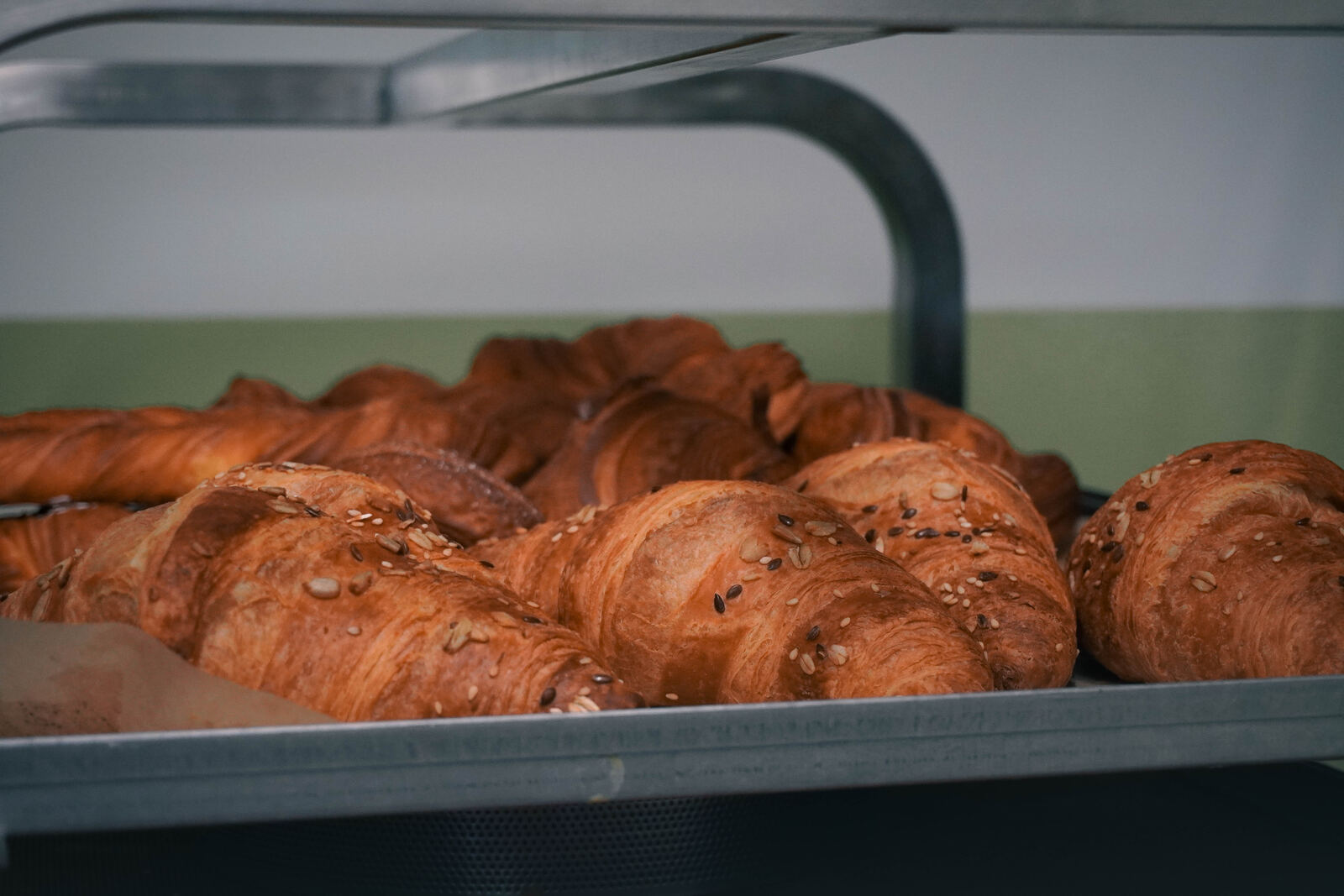
Making croissants at home takes time, but the result is worth it: thin, crisp layers outside, an open, airy crumb inside and the smell of butter filling the kitchen. The secret is lamination, the alternating layers of dough and butter created by folding.
Tips
- Keep everything cold: dough and butter must stay cold and equally firm. If the butter melts, the layers merge and the pastry will not flake.
- Fridge rests: do not cut them short. They relax the gluten and chill the butter between folds.
- Do not prove too warm: above 27-28 °C the butter starts to leak. Better to take longer at a moderate temperature.
- Hot oven: the first blast of heat makes the layers rise. Do not open the oven in the first 10 minutes.
Planning the time
A good approach is to make the dough in the evening, fold and shape the croissants, and let them prove slowly in the fridge overnight. In the morning, give them an hour at room temperature and bake. Shaped raw croissants can also be frozen and baked after a full prove.